Synopsis
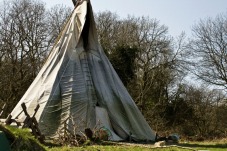
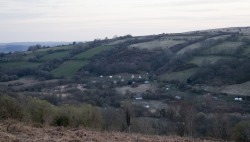
Tipi Valley is situated in a remote location deep into the Welsh countryside where the residents live sustainable lifestyles and rely primarily on nature in order to survive. This lifestyle involves working to survive as oppose to working to earn money in order to survive.
Five young men in their twenties leave the comforts of their homes to embark on a journey in an attempt to gain an understanding of alternative lifestyles. The documentary follows them in their struggle to cope without household basics such as electricity, heating and a toilet. During their stay in the valley, the young men must learn to adapt by undertaking essential survival techniques, such as cooking on an open fire, collecting firewood, rushes and fresh water. How will they cope? Which lifestyle is better?
Scope
1. Juxtapose life in a city with life in Tipi Valley by sending five young men to live in Tipi Valley for 10 days and film how they cope.
2. Explore the reasons why people have settled in Tipi Valley by interviewing the residents and using archive footage of the hippie movement in the seventies.
3. Explore what type of people choose to live in Tipi Valley and why?
Tipi, or not Tipi won 'Best Cinematography' and was runner up in the audience vote at Winchester's U-Doc Festival 2010.
If you would like to view the film on the documentary page please send us an email for the password.
Tipi Valley is situated in a remote location deep into the Welsh countryside where the residents live sustainable lifestyles and rely primarily on nature in order to survive. This lifestyle involves working to survive as oppose to working to earn money in order to survive.
Five young men in their twenties leave the comforts of their homes to embark on a journey in an attempt to gain an understanding of alternative lifestyles. The documentary follows them in their struggle to cope without household basics such as electricity, heating and a toilet. During their stay in the valley, the young men must learn to adapt by undertaking essential survival techniques, such as cooking on an open fire, collecting firewood, rushes and fresh water. How will they cope? Which lifestyle is better?
Scope
1. Juxtapose life in a city with life in Tipi Valley by sending five young men to live in Tipi Valley for 10 days and film how they cope.
2. Explore the reasons why people have settled in Tipi Valley by interviewing the residents and using archive footage of the hippie movement in the seventies.
3. Explore what type of people choose to live in Tipi Valley and why?
Tipi, or not Tipi won 'Best Cinematography' and was runner up in the audience vote at Winchester's U-Doc Festival 2010.
If you would like to view the film on the documentary page please send us an email for the password.
Director's Statement
The inspiration for this project originated from a walk in the Hampshire countryside where I encountered a man who was living off nature's resources, with only a tent as shelter. After a lengthy conversation about the state of the world, both environmentally and pollitically, I began researching with the assistant director of this project, Tom Boote, other individuals or communities who chose this alternative way to live.
I came across an article in the guardian entitled "I live without cash - and I manage just fine" by Mark Boyle, who lived for a year in a caravan using washed up cuttle-fish as toothpaste and ultimately gave up using money. This insipred me to look further in to his work where I came across freeconomy, a network which allows people to trade skills and information such as craftsmanship or good 'skipping' sites (a term used to describe the salvage of corporate waste) in return for food, for example.
After more research into communities living a similar lifestyle to that of Mark Boyle, we found a website called 'Diggers and Dreamers' where we came across a community in the heart of the Welsh countryside, known as Tipi Valley. After we got in contact with a resident there, we arranged for the whole team to stay for ten days in the 'Big Lodge' a large tipi used for visitor accomodation.
Upon arrival in Tipi Valley, we had a mixed reception from the residents with the majority not keen on film crews staying within their community. We found out that many of the residents were reluctant to be on camera and we all began to feel a bit unwelcome. However, we were there to make a participatory documentary about taking us out of our society and away from the luxuries we all take for granted. Bearing both aspects in mind we decided to keep the cameras away from the residents and only film the crew for a week, leaving us with two days to acquire any interviews from the residents. This became a very important and inevitably the correct decision as it allowed us time to get to know the residents and establish friendships and trust enabling more personal interviews.
During our stay in the valley we gained an insight into sustainable living and the benefits of living off nature's resources. We allowed ourselves one phone call to either family or friends and kept our mobile phones off for the rest of the ten days to detach ourselves completely from modern day society. There was little sense of a routine, such as waking up, going to work...apart from the daily tasks of collecting firewood and fresh water which gave us an eerie feeling of isolation from civilisation as we know it.
After returning home, we originally felt detached from our usual lifestyles but after a few days we slipped fairly easily back into them. It raised the debate into which lifestyle is better? As our primary objective was to make a documentary and our time there was limited, it would be unfair to pass judgement. However, personally having lived there, even though it was only for ten days, there was somthing special about living so close to nature.
I came across an article in the guardian entitled "I live without cash - and I manage just fine" by Mark Boyle, who lived for a year in a caravan using washed up cuttle-fish as toothpaste and ultimately gave up using money. This insipred me to look further in to his work where I came across freeconomy, a network which allows people to trade skills and information such as craftsmanship or good 'skipping' sites (a term used to describe the salvage of corporate waste) in return for food, for example.
After more research into communities living a similar lifestyle to that of Mark Boyle, we found a website called 'Diggers and Dreamers' where we came across a community in the heart of the Welsh countryside, known as Tipi Valley. After we got in contact with a resident there, we arranged for the whole team to stay for ten days in the 'Big Lodge' a large tipi used for visitor accomodation.
Upon arrival in Tipi Valley, we had a mixed reception from the residents with the majority not keen on film crews staying within their community. We found out that many of the residents were reluctant to be on camera and we all began to feel a bit unwelcome. However, we were there to make a participatory documentary about taking us out of our society and away from the luxuries we all take for granted. Bearing both aspects in mind we decided to keep the cameras away from the residents and only film the crew for a week, leaving us with two days to acquire any interviews from the residents. This became a very important and inevitably the correct decision as it allowed us time to get to know the residents and establish friendships and trust enabling more personal interviews.
During our stay in the valley we gained an insight into sustainable living and the benefits of living off nature's resources. We allowed ourselves one phone call to either family or friends and kept our mobile phones off for the rest of the ten days to detach ourselves completely from modern day society. There was little sense of a routine, such as waking up, going to work...apart from the daily tasks of collecting firewood and fresh water which gave us an eerie feeling of isolation from civilisation as we know it.
After returning home, we originally felt detached from our usual lifestyles but after a few days we slipped fairly easily back into them. It raised the debate into which lifestyle is better? As our primary objective was to make a documentary and our time there was limited, it would be unfair to pass judgement. However, personally having lived there, even though it was only for ten days, there was somthing special about living so close to nature.
Credits
Director - Jasper Amy
Assistant Direcor - Tom Boote
Producer - Loius Lammas
Co Producer - Tom Boote
Cameraman - Florian Klein
Editor - Jasper Amy
Assistant Editor - Louis Lammas
Sound - Biva Ouro-Gnao
Research - Jasper Amy, Tom Boote
Director - Jasper Amy
Assistant Direcor - Tom Boote
Producer - Loius Lammas
Co Producer - Tom Boote
Cameraman - Florian Klein
Editor - Jasper Amy
Assistant Editor - Louis Lammas
Sound - Biva Ouro-Gnao
Research - Jasper Amy, Tom Boote
Supporting Material
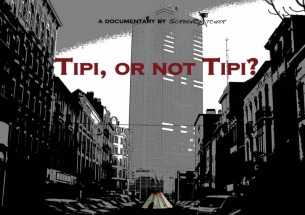
Documentary Poster
Created by Florian Klein
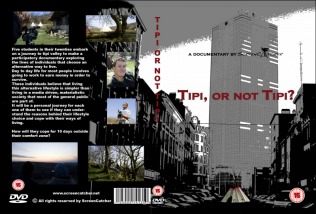
DVD Cover Artwork
Created by Florian Klein